
The most significant jump-scare the movie business has encountered in 2025? The resurgence of horror as a main player at the UK film market.
As a genre, it has impressively surpassed earlier periods with a annual growth of 22% for the UK and Ireland film earnings: £83.7 million in 2025, versus £68 million the previous year.
“Previously, zero horror films made £10 million in the UK or Ireland. Currently, five have surpassed that mark,” says a film industry analyst.
The top performers of the year – a recent horror title (£11.4m), another hit film (£16.2 million), The Conjuring Last Rites (£14.98m) and 28 Years Later (£15.54 million) – have all remained in the theaters and in the popular awareness.
Even though much of the expert analysis centers on the unique excellence of prominent auteurs, their successes point to something shifting between viewers and the genre.
“Viewers often remark, ‘This is a must-see regardless of your genre preferences,’” says a film distribution executive.
“These productions twist traditional elements to craft unique experiences, resonating deeply with modern audiences.”
But apart from aesthetic quality, the consistent popularity of horror movies this year implies they are giving moviegoers something that’s highly necessary: therapeutic relief.
“Right now, there’s a lot of anger, fear and division that’s being reflected in cinema,” says a genre expert.
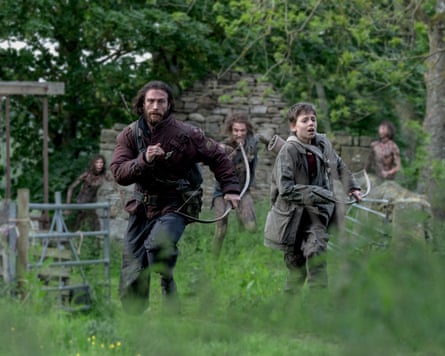
“Horror films are great at playing into people’s anxieties, while at the same time exaggerating them. So you forget about your day-to-day anxieties and focus on the monster on the screen,” explains a prominent scholar of horror film history.
Amid a current events featuring geopolitical strife, enforcement actions, extremist rises, and ecological disasters, supernatural beings and undead creatures connect in new ways with filmg oers.
“Some research suggests vampire film popularity correlates with financial downturns,” comments an star from a recent horror hit.
“The concept reflects how economic systems can drain vitality from individuals.”
Historically, public discord has always impacted scary movies.
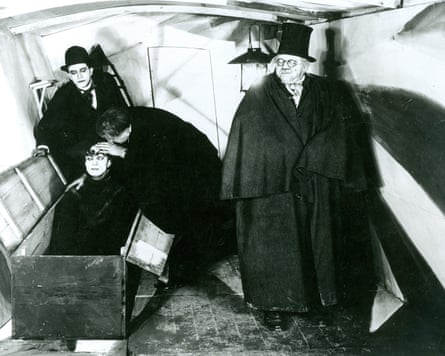
Experts highlight the boom of early cinematic styles after the the Great War and the chaotic atmosphere of the post-war Germany, with films such as early expressionist works and Nosferatu: A Symphony of Horror.
This was followed by the Great Depression era and Universal Studios’ Frankenstein and The Wolfman.
“Take Dracula: it depicts an Eastern European figure invading Britain, spreading a metaphorical infection that endangers local protagonists,” notes a commentator.
“Therefore, it embodies concerns related to foreign influx.”
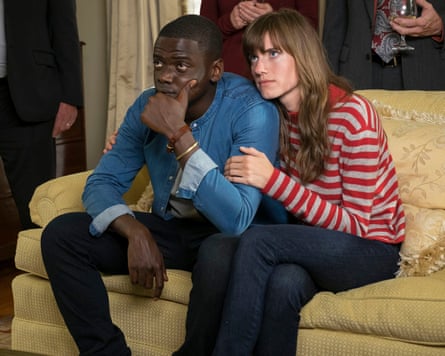
The specter of immigration inspired the newly launched rural fright a recent film title.
The creator explains: “My goal was to examine populist trends. For instance, nostalgic phrases promising a return to a 'better' era that excluded many.”
“Secondly, the idea that you could be with someone you know and then suddenly they blurt out something round the dinner table or in a Facebook post and you’re like, ‘Where did that come from?’”
Maybe, the current era of praised, culturally aware scary films started with a clever critique released a year after a divisive leadership period.
It ushered in a new wave of horror auteurs, including a range of talented artists.
“Those years were remarkably vibrant,” comments a director whose movie about a violent prenatal entity was one of the era’s tentpole movies.
“I think it was the beginning of an era when people were opening up to doing a really bonkers horror film which had arthouse aspirations.”
This creator, now penning a fresh horror script, notes: “During the past decade, viewers have become more receptive to such innovative approaches.”
At the same time, there has been a revival of the underrated horror works.
In recent months, a new cinema opened in the capital, showing obscure movies such as a quirky horror title, a classic adaptation and the late-80s version of the expressionist icon.
The fresh acclaim of this “rough and rowdy” genre is, according to the venue creator, a straightforward answer to the algorithmic content churned out at the theaters.
“It counters the polished content from big producers. The industry has become blander and more foreseeable. Numerous blockbusters share the same traits,” he says.
“On the other hand, [these indie works] feel imperfect. They seem to burst forth from deep creativity, free from commercial constraints.”
Fright flicks continue to disrupt conventions.
“These movies uniquely blend vintage vibes with contemporary relevance,” says an authority.
Alongside the return of the mad scientist trope – with two adaptations of a classic novel on the horizon – he forecasts we will see horror films in 2026 and 2027 responding to our current anxieties: about AI’s dominance in the coming decades and “supernatural elements in political spheres”.
Meanwhile, “Jesus horror” The Carpenter’s Son – which narrates the tale of holy family challenges after the messiah's arrival, and stars celebrated stars as the holy parents – is set for release soon, and will undoubtedly create waves through the Christian right in the America.</


